On this page
What is mesotherapy?
Mesotherapy is an injection technique that distributes very small quantities of a selected product into superficial skin layers. It is not the name of one product or a standard cocktail. Products containing hyaluronic acid, polynucleotides, amino acids or other components may all be described this way, but equivalent effects should not be assumed.
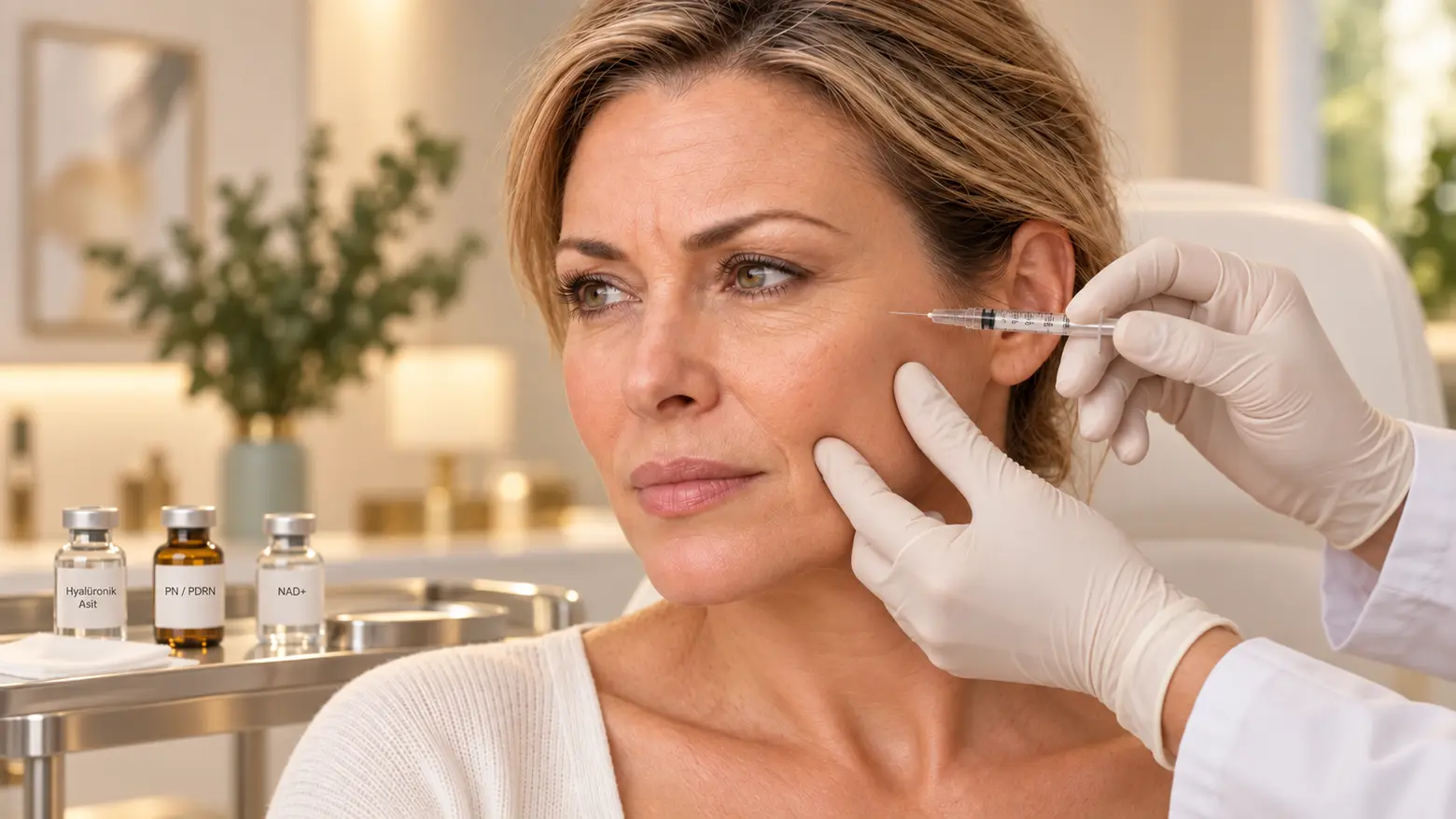
My starting question is what we are trying to change in the skin. Dryness, dullness, fine lines and uneven texture may call for different plans.
What about treatments marketed as a “youth vaccine”?
This is a commercial expression, not a single medical product category. The name alone does not identify the ingredients, effects or duration.
The exact product, composition, intended purpose and suitability for the area should be known before treatment. A substance’s natural biological role does not, by itself, prove a clinical benefit when injected into skin.
How do the ingredients differ?
- Hyaluronic acid: non-cross-linked products may be considered for hydration, elasticity and skin appearance. They differ from dense, cross-linked volumising fillers.
- PN and PDRN: sometimes marketed as “salmon DNA”, these may differ in molecular structure and formulation. PN and PDRN should not be treated as identical; each product needs its own evidence.
- Amino acids and vitamins: formulations vary widely. More ingredients do not automatically mean greater effectiveness; dose, stability and clinical data matter.
- NAD⁺ and other combinations: evidence for NAD⁺, peptides, antioxidants and similar ingredients must relate to the formulation and route. General biological knowledge does not establish the outcome of intradermal injection.
Which concerns may be considered?
Dryness, loss of hydration, dullness, fine lines, uneven texture and visible pores may be assessed. These are not promises of a particular result. Pore appearance also relates to oil production, genetics, sun damage and supporting tissue; one injection does not “close” pores.
Deep wrinkles, substantial volume loss and sagging are not problems that mesotherapy alone can resolve.
What I assess at the first consultation
- Skin condition: dryness, sensitivity, active acne, pigmentation tendency, pores and daily skincare.
- Medical history: allergies, medicines, pregnancy or breastfeeding, cold sores and previous procedures.
- Product and expectations: ingredients, potential changes, limitations and the proposed schedule.
Treatment and aftercare
After cleansing, the product is distributed through small, superficial injections. Small bumps, redness, tenderness, swelling and bruising may last hours or days. Early brightness or fullness should not be taken as the final result.
Session intervals and aftercare depend on the product. Individual advice covers when to resume potentially irritating skincare, makeup and exercise.
When extra care is needed
Disclose active infection, cold sores or significant inflammation in the area; pregnancy or breastfeeding; serious allergies; bleeding tendency; immune-related conditions; and medication. Earlier injections of unknown composition or recent procedures may also affect planning.
Possible adverse effects
Temporary redness, bumps, tenderness, swelling and bruising vary with the product, area and skin response. Infection or a product-related reaction can occur less commonly. Unexpected or prolonged symptoms should be discussed with the treating doctor, along with other individual risks.
Frequently asked questions
Is mesotherapy the same as filler treatment?
No. Mesotherapy generally distributes small amounts beneath the skin surface for skin-quality goals. Fillers provide volume or structural support in a selected area. Both may contain hyaluronic acid, but their formulation and purpose differ.
Which product is best?
An ingredient list alone cannot establish a “best” choice. Skin needs, area, concentration, composition, permitted route, allergies and previous treatment must be considered together.
How many sessions are needed?
The product, starting condition and intended change guide the number. Some products suggest a single treatment; others use an initial series. Product instructions and an individual assessment determine the plan.
When may results be noticed?
Early fullness can include swelling. Changes after hyaluronic acid hydration treatments may become noticeable in one to two weeks. Series using PN/PDRN, amino acids or other formulations are often assessed more meaningfully at four to eight weeks, with variation between products and people.
Are PN, PDRN and “salmon DNA” the same?
Not technically. Molecular length, production and formulation can differ. “Salmon DNA” is often a general marketing term and does not fully describe a product.
Can different products be mixed?
Not every product is compatible with others. Manufactured formulations and mixtures made afterwards are not equivalent. Compatibility, sterility, dose and authorised use need to be verified before combining products.