Longevity
Snoring and waking up tired: when should you check for sleep apnoea?
When can snoring and waking up tired suggest sleep apnoea? Learn about sleep tests, treatment options and practical steps towards a more alert day.
You may feel that you get enough sleep yet wake up unrefreshed and struggle to keep your eyes open during the day. If you also snore regularly, or someone has noticed pauses in your breathing, it is worth having your breathing during sleep assessed. The aim is to find the cause of your tiredness and help you feel more alert and able to manage your day.
What happens during sleep apnoea?
In the most common type, obstructive sleep apnoea, the upper airway repeatedly narrows or closes during sleep. Airflow may decrease or briefly stop, and oxygen levels may fall. The brain briefly wakes you to restart breathing. You may not remember these awakenings in the morning.
Your sleep can therefore be fragmented even when you spend plenty of time in bed. Sleep apnoea also matters for blood pressure and cardiovascular health. In a longevity approach, assessing night-time breathing is part of a plan to support daily energy and long-term health.
Which symptoms should prompt an assessment?
Not everyone who snores has sleep apnoea. Speak with your primary care clinician or a sleep specialist if you notice any of the following:
- Someone tells you that your breathing stops during sleep, followed by a loud breath.
- Waking with a choking sensation, or frequent loud snoring.
- Unintentional daytime dozing or difficulty staying awake in meetings or while watching television.
- Morning headache or dry mouth, or frequent trips to the toilet at night together with waking unrefreshed.
For some people, fatigue and difficulty sleeping are more noticeable than dozing. This can be how symptoms present in women in particular. The absence of obvious daytime sleepiness does not, on its own, rule out the need for an assessment.
What test do you need?
The consultation covers your sleep pattern, snoring and medicines. Short questionnaires help estimate the risk. Diagnosis requires an appropriate test that records your breathing during sleep.
Some adults without significant additional medical conditions can have a home sleep apnoea test if their clinician considers it suitable. Others need a more detailed overnight recording in a sleep laboratory. Heart or lung disease, a previous stroke or severe insomnia can affect which test is appropriate.
If a home test appears normal but symptoms and clinical suspicion persist, a laboratory study may still be needed. A smartwatch, snoring recording or oxygen reading alone cannot replace a clinician-arranged sleep test. You can bring these records as supporting information.
What could treatment change in your daily life?
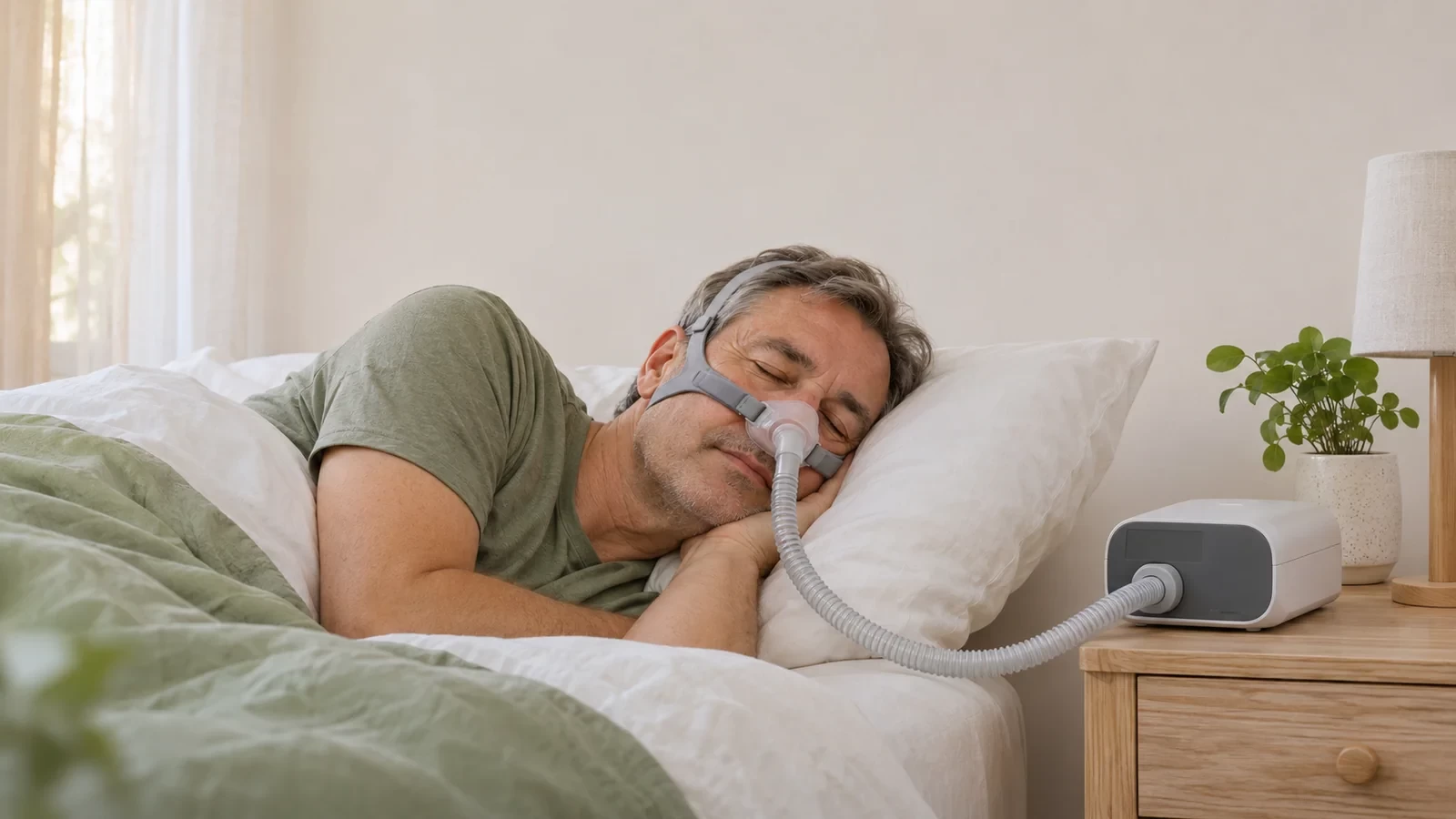
If sleep apnoea is diagnosed, treatment is selected according to the test results and your symptoms. One common option is CPAP or an automatically adjusting PAP device. It delivers pressurised air through a mask to help keep the upper airway open during sleep.
Regular use can improve alertness and sleep-related quality of life, particularly in people with daytime sleepiness. It may also help blood pressure control in some people with hypertension. Your own goal might be to wake feeling more rested, stop dozing unintentionally in the afternoon or find it easier to concentrate at work.
Mask fit and device settings matter. If you have air leaks, a dry nose or discomfort, describe these at your review so that alternative masks or settings can be considered. A custom-made oral appliance fitted by a dental professional is another option for suitable patients. Whichever treatment is chosen, its effect on breathing needs to be followed up.
What can you do this week?
For one week, make brief notes about your bedtime, waking time, any daytime dozing and how you feel in the morning. Ask someone close to you whether they have noticed pauses in your breathing or gasping during sleep. Bring your blood pressure records and medication list to the appointment.
Limit evening alcohol and keep regular sleep hours. Sleeping on your side can help some people breathe more easily; whether it is suitable for you can be assessed alongside the test results. Tell your clinician if you take sleeping tablets or sedatives, and do not stop them or change the dose on your own.
Do not drive if you are dozing at the wheel. Seek prompt assessment, especially if sleepiness has caused a near miss. Saying “My daytime sleepiness is affecting my safety” at the appointment makes the urgency clear.
Sources
- NHLBI: what is sleep apnoea?: Explains interrupted breathing during sleep, its effect on sleep quality and its importance for health.
- NHLBI: symptoms of sleep apnoea: Describes snoring, breathing pauses, daytime sleepiness and other ways symptoms can present.
- American Academy of Sleep Medicine: diagnostic testing guideline: Covers the choice of home testing or laboratory studies and what to do after a negative or inadequate home test.
- American Academy of Sleep Medicine: PAP treatment guideline: Provides recommendations on daytime sleepiness, quality of life, blood pressure and treatment follow-up.
- NHLBI: treatment options for sleep apnoea: Explains PAP devices, custom-made oral appliances and practical changes to daily habits.
- American Thoracic Society: sleepiness and driving risk guideline: Explains why dozing at the wheel and a history of near misses require prompt assessment.